Wishful Thinking… — Derek Barton – 2017

capture-29

Tonight I would like to just give you a brief glimpse into my mind and a snapshot image of some of the people from Consequences Within Chaos, my first novel.

As every writer and perhaps every reader will tell you, the characters and the places where they live can become so real, so tangible that when the book ends, you can actually feel a sense of loss.  A painful separation from heroes that you cheered for, walked right by their side when they fell or when they made a bad mistake.  When the book ends, you lose these new friends.  Trust me, the writer feels that same way as the readers.

Well, at least until the author brings them back to you in another story.  That is the whole fundamental reason for “sequels” — we miss these people and want to see them succeed at least one more time!

Anyway, I digress.

If I were to make a movie adaption today, who would I pick to play them?  Here are my choices for the main characters (heroes and villains) of Wyvernshield:


Prince Taihven Artadeus

Andrew Garfield

taihven-artadeus

Prince and Heir-Apparent to the Throne of Tayneva and the capital city of Wyvernshield. He has lived seventeen years in shame and an embarrassment to his royal family due to a hidden mental malady that blurs the lines between reality and fantasy for him.


Princess Letandra Artadeus

Georgie Henley

letandra-artadeus

She is older than her brother Taihven and has always been his protector and biggest defender.   Often Letandra finds herself in the middle of conflicts between Taihven and his Queen mother, Demetryce.


Queen Demetryce Artadeus

Helen Mirren

demetryce-artadeus

Queen and Court Justice for Wyvernshield.  Her cold demeanor and hard line stance on most subjects has not made her a popular person among the citizenry nor is she a well-respected diplomat like her husband.


King Haedrec Artadeus

J.K. Simmons

World premiere of 'Kung Fu Panda 3'

A legendary ruler and adventurer that resurrected the city of Wyvernshield from ancient ruins.  He has always prevailed for his people and his triumphs told often in song and story.  However, at the twilight of his life, he is succumbing to the Withering Disease when his city is bracing for a crushing siege by an army of beasts known as the Viestrahl.


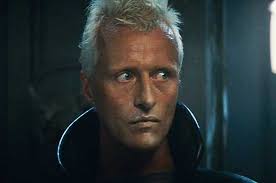
Auste Cros’seau

Rutger Hauer
auste-crosseau

Son to an exiled noble that once tried to usurp the Artadeus Throne.  The dangerous spellcaster vows to restore all that was taken from his family and expects royal blood to be spilt in the streets of Wyvernshield.


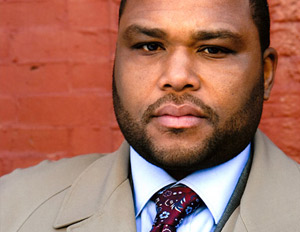
Sergeant Renald Devin

Anthony Anderson
renald-devin

A charming warrior and leader among the Wyvernguard.  He wants to be instrumental in stopping the Viestrahl once and for all.


Sergeant Deliah Blackstaff

Emily Black

deliah-blackstaff

Another strong leader within the ranks of the Wyvernguard.  Her growing reputation and fighting prowess has paved the way for other females to shine in a male dominant military.  She even inspires Princess Letandra to take on more of an active role and face challenges head-on.


Captain Bardun Ruessard

Terrance Stamp

Wanted

Battle-harden veteran responsible  for finding answers that will protect the lands of Tayneva while defending against internal citizen unrest and political strife centered around  the Artadeus Throne.


Taliah

Isla Fisher

taliah

A young castle maid forced into a dangerous position that will cost her life, freedom or the country she loves.


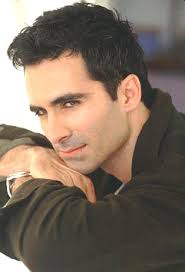
LLasher

Nestor Carbonell
llasher

Contracted for a dark deed, this Camiyaan slaver discovers more than he could have ever bargained for and becomes entwined in the volatile, bloody history that has risen to haunt the Artadeus Throne.


This was an entertaining exercise and a silly fantasy that I thought would be fun to share with you.   You may of course have different depictions of these people in your head as you read and that is fine — in fact I would love to hear your thoughts, feedback and/or opinions of who you would like to see as these characters.  Let me know!!

The Art of the Juggle… — Derek Barton

capture-23

“Keep a small can of WD-40 on your desk—away from any open flames—to remind yourself that if you don’t write daily, you will get rusty.”
—George Singleton


“A writer writes.” 

Okay… This adage is a very old and a very easy piece of advice to spout, but how does this really guide us?  I suppose the practical message means that in some form or some way, you need to get writing done as much as possible.  Stop letting the poor excuses or the multiple obstacles get in the way.  Like any other craft, as you practice or perform, you will hone your skills and find it gets easier and better.

But, we only have 24 hours each day to get the millions of distractions to ignore, objections to overcome, questions to surpass, phone calls to return, emails to reply, careers to succeed in, family to care for and finally extract a small window of time out of the day for a writer to write (MAYBE) before we collapse into bed.

I have here a few techniques which I have garnered through experience and research and used to find that elusive window of opportunity.

First, take an inventory of your life – a snapshot of your day and then your week.  By understanding just what you want to accomplish, what has to be done each day, what is a common issue, then you will be able to spot trends or patterns that you can take advantage of.

Using me for example:   I work the late shift as a sales supervisor (the day job) Sunday through Thursday 11:30 to 8 pm (the “has to be done” part).  I know myself – I am not a morning person; more of a night owl.  I have a large family and a list of household chores like everyone else.  I like to write when it’s quiet and I can focus (my “common issue” part).

My routine is thus:  During the week — Wake an hour before work, get ready and then rush off (after fitting in a couple chores, Ha!).  Then after work, come home, eat dinner, watch maybe an hour of television with the family, then go walk (the “what you want to accomplish” part — I am putting in a nightly effort at walking to reduce my weight).  When I get back, the household has settled down and the family has gone to bed.

Now is MY TIME…

Much like my routine for the week, during the weekend my routine is to spend quality time with my loved ones, get the rest of the chores completed, walk after dinner and then write in the evening.  That is really all it takes.  Track down what you are doing consistently during the week with work and outside of work.  Know when you are the most creative/focused and then make that YOUR TIME.

Second, make this a habit and a part of who you are.  Invest in yourself, commit to your career and take to heart the idea that you are a writer.

It has become second-nature to me.  Not only are you being more productive, the established time let’s everyone know that this is when you are writing.  It’s your signal that you are working.  Now, if I haven’t actually written that day, I find myself getting restless and I toss-and-turn in bed.

Third, take advantage of even the little windows of time.  Some writers have found success by slipping in writing on lunch breaks at work, writing while waiting for the kids coming out of school, writing after dinner before putting the kids to bed.  Even two or three fifteen minute blocks combined in a day can really add up.  If you don’t need a long period to accomplish a bit of writing or if you don’t need a startup period to get your creative juices flowing, then this might be the best option for you.

Fourth, remove all internet and phone distractions when you write.  It’s super easy to “just check on that post” on Facebook or maybe see what Trump said this time on CNN.com.  Also if you leave your email up, you will get notifications that will detour you or pull you right out of your writing mode.

Same goes with having your cell phone next to you.  It takes only one notification bleep to derail you.  Best way to make good use of the little window you may have is to remove all these possible distractions.  I only keep one site open that plays classical music in the background – the music helps me focus.

These four steps have really assisted me in understanding what I needed to do and how to find a time to write, market and/or research each and every night.

Hope this helps you!  NOW go write, writer!

Write while the heat is in you. … The writer who postpones the recording of his thoughts uses an iron which has cooled to burn a hole with.”
—Henry David Thoreau


Lost Within the Trees… — Derek Barton

capture-6

Are you ready to step out of the inky shadows, march down the twisted path and stride boldly into the shining sunlight?

In other words, your first novel has gone through a dozen  rewrites and you’ve made all the adjustments recommended by your book critiques (either from professionals or beta-readers) –  so what exactly is your next move?

Well, be prepared!  Not only will you have to sell your work of art, but it is now time to sell YOU!

M A R K E T I N G

Ugh… That word alone causes an immediate case of cold shivers down the spine to most of us new indie writers.  I know that I had no real idea what to do.  Even up through today, I am still looking out for new ideas, original techniques or alternative options to get my book and my name out there.

Now questions you will need to ask yourself are:

  • what are your expectations with the marketing?
  • what are your resources?
  • what are the outcomes that you want and are they realistic?

If your expectations are to get immediate sales and fame, that’s not too likely.  I am seeing that many writers have to play a slow game of “If I write it, the readers will come… eventually.”

capture-5

Word of mouth and a variety of original works will gain you a loyal fan reader base.  If you appeal to different types of readers that can also help grow your share of readers.

What about your resources?  Are you financially able to invest in your work?  Can you afford to market or advertise?  Everyone’s budget varies of course and there is no set answer on that.  Just because you throw a ton of money at the wall will not guaranty success, but on the other end if you don’t put anything into getting your name out there, you run the risk of being obscured in the blur of thousands of new published books every year.  Another new name among a mountain of new names.

The outcomes or the payoff for all this marketing can bring you readers or it can also bring you some new opportunities.  I haven’t seen any true financial boost (yet!), but that could be an option.  Marketing is a gamble and it’s a gamble on you and your writing. When you decide what you want to do, you also have to decide what is going to satisfy you.  You are investing time, money and your own name for the sake of your story. On what level do you say that your marketing has been successful and fulfilling or at what point do you stop, redirect your efforts?  Those are answers you will have to work out yourself.

Personally (and I always try to share with you the avenues I took that worked or didn’t work for me), I researched a lot online, read a ton of blogs, bought multiple books for marketing and strived to figure out what I felt I could do, afford and what I wanted from all of this.  Sure I want thousands of readers and the life of a famous writer (why not?!), but that is a lofty goal for a lifetime not a goal for just one book from a first-time indie writer.

I don’t have the money for commercials or making Youtube ads, but maybe you do and that can be an option for you.  Again, investing and marketing is a unique path for each person.

By the way, the biggest mistake the experts are saying that newbies make is paying to have their book reviewed by a site or company.  There are tons of ways  to get your work reviewed for free — just means you will be doing a lot of emailing or posting (begging) readers, family or friends to write them for you. Or you can make arrangements with beta-readers — send them a free book for a promise of a book review.  Why big push for review and feedback?  Reviews will sell your book on Amazon and other sites.

The best advice and the most stated advice I have seen is to utilize Social Media outlets and make sound uses of them!

Get your name, profile, bio and blurbs about your books on each of these sites:

  • Facebook (business author page)
  • Twitter
  • Linkedin
  • Goodreads
  • Amazon Author page
  • AND MAKE YOUR OWN AUTHOR WEBSITE/BLOG

These will get your name, face and books in front of thousands of readers.  Will these viewers all immediately want to read every word you have written?  No, of course not, but it will reach a lot more than you’d be able to do on a daily basis by yourself.

Make good use of them by posting often about your work, give samples for readers to read of upcoming work or from published works already available for sale, share inside views of what it takes to produce your writing and be sure to announce where you are going to be for book signings.

One tip I followed recently that has paid off pretty well for me was Book Giveaways.  On Goodreads.com, I posted a Goodreads Giveaway for a few signed books and this has generated a ton of interests in not just readers wanting free books, but I have over half the contest entrants placing my book now on a “want to read” list.

Another outlet for me will be book signings and comicon appearances.  This is a fantastic way to get media on you (nothing is more exciting than seeing your name on an event website as a “guest appearing author”!) and it’s an easy way to meet fans and build an honest and lasting fan base.

If reaching out and sharing your story is the most important goal for your writing then you have to do the hard work of getting that attention.  The amount of effort you put into your marketing will be a key factor in your own success.

Likely you went down the road of self-publishing like I did because you didn’t want to waste any more time waiting for some literary agent or traditional publishing house to give you, “an unknown”, a chance.  In these times, it probably just doesn’t make “business” sense for them to market you…  Is that fair?  NO!!  Is it the world?  Yeah… at least for now.

And because you have decided you aren’t going to wait for them, that means that you are the Marketing Department.  You are responsible for it all.  Now get busy!

Hopefully, I have cut down on some of your own marketing research and given you some helpful direction.  Some of this may be obvious or maybe some of this might be the spark you needed.  Either way, I wish you all the luck and blessings in your endeavors into the Murky Forest of Marketing!


One Thousand Questions… — Derek Barton

blog-pic-20

As I stated in my last blog, After You Have Climbed The Mountain…, I wanted to share some of the lessons I have learned about self-publishing and some factors to watch out for and consider how to deal with.

You finally have gotten your manuscript to its glorious, untouchable near-perfect state with edit after edit, beta-readers and even professional reviews (if you have taken my advice and gotten a professional copy editor).

Now what?

At this point you have to decide what direction you will want to take and who you are going to involve with your great work of art.

You may not realize just yet, but you will have a lot of questions ahead that you must take some time with and you will need to make some definite decisions. There are many paths you can take, but the good news is, I didn’t find that there are “wrong” answers to the following questions. I found that there are just different experiences and outcomes you can have with your various choices.

Here is the list of some of the critical questions that we can get into and work through together:

  • Who is going to design your book’s cover art?
  • Are you going to seek out local artists?
  • Are you going to seek out professionals?
  • Are you going to do it yourself?
  • What do you want as a cover?
  • Are you going for an actual scene from your book?
  • If so, which one and which one do you use that won’t give away too much of your story and/or mislead the readers?
  • Which publishing site am I going to use?
  • Do I want to use more than one?
  • Am I going with Amazon/Createspace first?
  • Or am I going with Nook (Barnes&Noble) first?
  • Do I sell my work through Kindle?
  • Do I want just ebooks or do I also want actual hardbound or paperback copies?
  • If I want the actual product in hand, how much do I order?
  • Do I have the money to invest?
  • Do I have a place to keep the inventory?
  • How do I sell my work?
  • What price line do I shoot for?
  • Do I give my work away free at first?
  • Do I do contests, advertising and/or giveaways?
  • What are some of the best ways to market and get my name out there?

I didn’t lie to you when I said that you have many considerations ahead. And NO, I do not have all the best answers and the best techniques. I just have my own experiences and results to share with you.

So going in order of the questions presented I will share my experience and what I decided.  Hopefully, this will give you even more insight and information to which you can make your own choices.

Who is going to design your book’s cover art? Are you going to seek out local artists? Are you going to seek out professionals? Are you going to do it yourself?

I really lucked out here. My cover art for Consequences Within Chaos was designed by a good friend Daniel Thomas of Dark Art Komics, who is also a professional comic book/graphic novel artist. You can check out his work here: Daniel Thomas — Dark Art Komics.

Before Daniel reached out to me, I went with a site you might have heard of called Fiverr.com.  I won’t say outright that this was a bad idea. For anyone who is not familiar with it, the site is set up to offer low cost solutions for editing, cover book art work and many other services from all over the world. Most of their representatives offer $5 packages or higher value deals for their work. I tried it as I am always dirt poor and wanted to see just what $5 cover work I would get.

The artist that I selected asked in email for what I was looking for. I detailed that my novel centered around a royal family in a medieval fantasy prepping for an oncoming war. What I got back was comical if not tragic. She sent me a cover with three soldiers silhouetted in black in a field holding what I am guessing were sub-machine guns. Insert #faceinpalm here! As I stated above, this site I am sure works for some and I am sure if you went with a higher value package you could “get what you pay for”.

Anyway, I know that not everyone knows an artist or has that sort of connection that I just happened to have. In my own research, I found some articles on the web that offered some other possible good resources to find your own cover artist. You could check out the local colleges to search for student artists that might work with you on a cheap basis. You could also go on to websites like Craigslist and advertise for an artist. Or you might go on web forums and speak with other writers to see who might be able to offer you a direction or a lead.

One thing to keep in mind is that you need to be flexible with what you are looking for, be patient and take some time to know what you would like to use on your cover.   The more details you can offer the artist the better. Having several options in mind would also be a good idea. Remember that your cover is your “first impression” with the reader and it definitely has to be eye-catching and stand out, especially when you are competing with thousands of other new books that come out each year.

The biggest lesson to learn for new and first time writers is that there is still a lot of work to do with the novel after you have completed writing it. I have only scratched the surface of the questions I have presented to you, but I will go over more in my next blog.

I will submit to  you as a self-published novelist, that this ride is so worth the work and effort. Take the time to think of your options as this is your baby.  Dress her up nice!

You are in for a helluva ride and an exciting experience. And it will get even easier the next go-around. PROMISE!

After You Have Climbed The Mountain… — Derek Barton


blog-pic-19

Back in July when I first created this site and began to delve into writing blogs, I stated I also wanted to “share the wealth” of what I experienced and learned in my own journey into self-publishing. This is the first in my series of doing just that: giving you the readers a behind-the-scenes look into the steps involved and the resources that are out there.

The first step without a doubt is the most crucial and difficult task ahead: your manuscript. This is the main reason you are even writing after all and this is the focus point of every reader, editor or publisher that comes across your work.

Why you ask is the manuscript the most difficult part? Besides the obvious fact that you will want a compelling, provocative work that leaves your readers breathless and wanting even more. It is a top priority because there are so many working parts and a multitude of intricate details involved that have to be precise.

What I mean by that is if you want to be taken serious as a writer and by the industry, be trusted by your readers and/or fans, you have to produce value as well as art. Your manuscript cannot be riddled with mistakes, typos or grammatical errors.

Not only will your error be an eye-sore that some readers will not be able to overlook or forgive, it automatically defeats the very purpose of what you are doing: immersing the reader into your world.

If the reader comes across an error or typo in your prose, it is more likely that instead of continuing to read, that they are spending their time deciphering what you actually meant or determining what the real word you were wanting to use. In other words, instead of being right beside your hero as he paces in indecision in front of the creature’s lair and the reader is wondering whether your hero will brave the shadows ahead and face possible horrific death, a giant hand comes down snatches them right off the land of fantasy and right back into their grim desk chair of reality!

I spent three years off and on writing my first book, Consequences Within Chaos. However, when I was at the end, I quickly found out that this was not the conclusion I expected! No, what I faced was a ton of work ahead in editing and proofreading. It was as if I had struggled up the side of a huge mountain only to face a vast ocean on the other side before I could get home.  In fact, I spent another two years editing and reworking my book. Every time I thought “okay, now I am ready to have this sucker published!” I would find or a beta-reader would find an ugly, glaring error.

The main reason we as writers are not able to see these pesky word-gremlins ourselves is due to the fact that we are too emotionally tied to the work. We are blind to the little flaws of our work just like every parent feels unconditional love and pride in everything our own children accomplish. We know what we meant even if we didn’t actually convey it correctly on the page. Our brains fill in the missing words or even corrects the spelling in our minds so fast that we are literally just smart enough to get ourselves into trouble!

What can be done to fight this dilemma?  The best advice is to have it done by a trusted professional.

Is it cheap? NO WAY! The industry standard is relatively around $.02 to $.04 a word.

Will this prevent you from tarnishing your reputation, save you embarrassment and give you that polished, professional story?  Yes.

What if you are like me and on an extremely tight budget? Then you have to be prepared to do whatever it takes to have a clean manuscript and a work that you can be proud that your name is on. As I said, it took me two years of several full revisions, a lot of work with other writers (trading books for review), several rounds of beta-readers and tons of research and studying writing craft articles.

I am very pleased and happy with my work, but in complete honesty, I am also aware that I would have saved time and effort using a professional editing service. I am currently developing my sequel which I fully intend to submit to an editor this time.

There are certain elements to self-publishing that you can work on a DIY model, but there are other elements that truly require dedicated professionals. This is just one of the lessons I have learned and I am passing along here.

Diving into the Oceans of Your Characters… — Derek Barton

Blog Pic 10

I would like to expand a bit on my blog, Finding the Character Within….  Here I want to show you some of the ways I work up my character backgrounds and elaborate on the questions I ask myself.

I will show you my notes that I made for Queen Demetryce Artadeus from Consequences Within Chaos.  She is the main character’s mother who has a deep-seated contempt and malice towards him.

A lot of what I wrote for this character did not even get into the book.  Yet having it in my mind helped me direct her actions, guide her dialog and even her interactions with other characters, both noble and even criminal characters.

Queen Demetryce Artadeus

How old?   67 years old

What does your character look like?  Long, grey-blond hair, 5’ 9” and 121 lbs.  Average looks, but her constant frown makes her seem uglier than she really is.  I picture Dame Judy Dench or Dame Helen Mirren in my mind.

Where does she live?  As Queen of Tayneva, she shares the Castle Adventdawn, of course with her family, but she also has ties to her own family in a smaller kingdom, Yata-Malai.  She makes semi-annual trips to visit her sisters and her surviving aunt.

Where is the character from?  From the small, island state of Yata-Malai.  Malais are very orthodox and pious.  Often accused of being religious zealots and have very rigid moral codes.  Murder, adultery, rape and other such immoral evils are persecuted strictly.  In the cases of adultery and even rape (in some cases) the victim may be blamed as well and suffer similar shame.  Think Quakers as far as their religious purity and strict doctrines.

What kind of childhood?  She went through a rigorous childhood as a student of the temple and was on the track to becoming a priestess.  In a chance to boost their position in world powers though, her father sent her to wed a young duke, Haedrec Artadeus.  Although this ended her promising path as a priestess, she found she was taken with Duke Artadeus and they married shortly afterwards.

What does the character do for a living?  Not only the functioning Queen of Tayneva, but she leads the court affairs and acts as court justice administrator.  Her iron fist philosophies and her decisions have made her many enemies and many “bought for” allies.  Not an evil woman, but has fallen into corruption by the power of her position and her means are always justified in her mind.  She also maintains her magical Mending Skills and religious practices.

How does your character deal with conflict?  Mostly with an icy demeanor when she doesn’t get her way, but as of late she has become very short fused.  Especially when it concerns her son, Taihven.  He is a constant reminder of her secret shame of rape and the worst event that happened to her in her life.  She cannot let go of her anger and has grown to hate him due to his embarrassing episodes of mental instability.  In some respects, she feels her daughter, Princess Letandra has become quite a strong leader and she even feels slightly threatened by her growing leadership skills and popularity among the citizens in Wyvernshield.

Who else is in their life? Her family is the center of her world, but that world in her eyes is a constant source of drama and aggravation.  Her only happy relationship is with her husband who is sadly dying a slow, debilitating death.  The court affairs are the only outside distraction and depending on her mood, she takes out her days on the poor saps brought in front  of her judging bench.

What is your character’s goal or motivation?  In spite of the threat in power and popularity that Princess Letandra has, Demetryce is pushing to have her become Lady Magistrate.  This would supersede Taihven, the Heir-Apparent.  She would rather have Letandra to deal with and perhaps have sway over instead of her son who has his father’s stubbornness and of course the mental malady.  She is extremely frightened of facing alone this on-coming war with the creatures known as the Viestrahl.  Her goal is to obtain the Throne for Letandra before King Haedrec dies.  Demetryce has decided that if necessary she will imprison, hide or as a last resort, have her own son kidnapped and sold into slavery.

As you can see, this character depiction is in-depth and thought through.  I had a strong sense of who she was and how she would react to coming events in my story long before I even started writing the book!

With questions like this, exercises to explore their background, you find and develop layers to who they are.  These are real people to both you and the reader.  Characters should have some conflicting emotions and some quirks to their nature.  We all do.  Why wouldn’t the people in your story?

Did you find this helpful or do you think you can use some of these questions for your own characters?

That Spell You Weave… — Derek Barton

Blog pic 9


This week I have been focusing on research for the upcoming sequel.  I want to expand upon the basics of magic and spellcasting from my first book, Consequences Within Chaos.  Again even though it may not always be a huge part of your characters’ lives, it comes into play and it’s an important detail to work out.  Knowing what is available or what can be utilized by any character can help direct your plot as well as add depth to the world surrounding them.

In the first book, my main character Taihven uses “Sigil Magic” which means that before he casts a spell, he inscribes a fiery pattern in the air specific to the spell he wants to use.  It is the spell’s “focus” or what draws out unique powers in unique ways.  His specialty is the Evoker Class: spells based in natural elements (fire, earth, air, water) and for destructive or offensive uses.

His sister, Letandra, utilizes Mending Magic (Healing).  This type of magic is more energy or soul-powered magic and the power funneled through the hands.  This type of magic also gives you an insight to the type of person she is:  a guardian or protector at heart.

The villain or my antagonist has unusual abilities and spells that require a vocal element.  Definitive words are the focus for his spells which are of a chaotic nature and also used destructively.  It added more to my novel’s final climatic battle — two opposing types of magic versus both using the same type of spells against each other.

One other type of magic I hinted at is used by a secretive cult called the Beleardea.  They are “facilitators” or middlemen that specialize in obtaining cursed items or finding cursed items to be bought by the highest bidders.   They are not actively evil, but their amoral actions define their motives.  The magic that they utilize is Eldritch Magic.  This is archaic magic that one can derive from an ancient deity or entity after it grants you favor when you  act on its behalf.  The Beleardea serve an ancient evil and thus gain incredible power from it.

When you google “types of magic” you will absolutely be amazed at just how many types there can be.  Not just the old wand or from a staff type of magic used in the Harry Potter stories, but magic centered on energy, planar, divination, elemental magic, soul (“ki”) magic, blood ritual, transformation, necromancy or even witchcraft.  There are over a hundred different versions of magic types.  So when you decide that you are going to have a fantasy world be sure to give this aspect a lot of thought.  It will define your world, your characters and the lands that these powers can come from.

What other types of magic appeal to you as a reader?  What would you like to see in a movie?  Couldn’t it be argued that the Force is just another version of magic?

Finding the Character Within… — Derek Barton

Blog pic 7

Blog pic 8

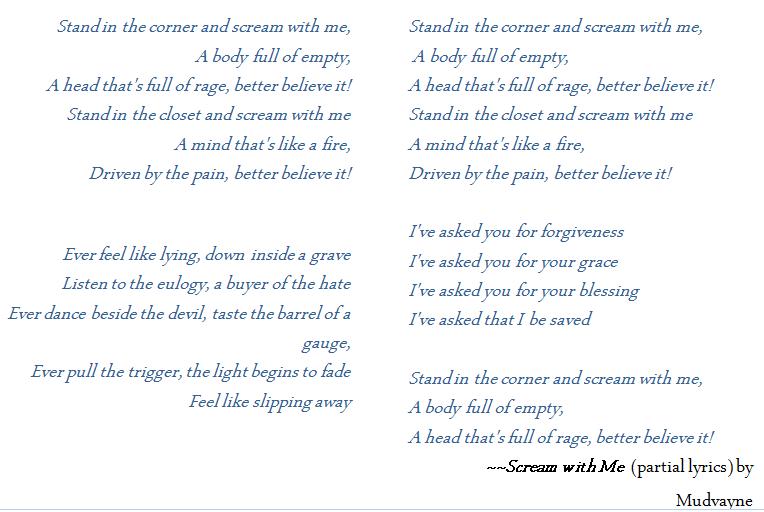
Those words literally scream with a story, a background of tormented history.  This person’s agony and pain are their whole world.  It motivates their actions, taints their decisions and monopolizes their every thought.  It makes you ask why?  What happened?  And when you are working up your story or novel, you have to have that level of intimacy and deep understanding of what drives him or her.  You want to know the why behind it all.  As the writer, you need to know the truth and the source.

This all of course ties into what I was talking about in my last blog, Where Your Path May Lead… As with world-building, knowing each facet of your characters is crucial to making the story come alive in the reader’s mind.  Overall, every novelist or writer wants to carry their readers away and keep them immersed in their land or story.  It’s the whole reason we live to write!

An unforgivable mistake and the fastest way to breaking a reader’s immersion is having your hero and/or villain act out of character.   When they do something that is abnormal or perhaps even far-fetched, questions immediately jump at the reader and they are going to want to know why.  When the reader is stepping out of the story to ask themselves questions or to wonder about the hero’s actions, how can they continue in your world?  How are they focused any longer on your story?

They are many great ways to build and to delve into your characters on the internet.  I have found a couple that I use and I have added my own questions that help me explore the character’s fears, goals, dreams or even hatreds.

You start off with the basics:  name, age, height & weight, hair & eye color, race.  Then you go into the background:  What do they do for a living?  Where do they live?  Who is close to them in their life?   Now go deeper:  What is their current goals or motivation?  How do they deal with conflict?  What was their childhood like?  Do they have anything in their past they are proud or ashamed of?

Another great resource I found, came from the writer Michael A. Stackpole who has written several Battle Tech novels and eight Star Wars novels himself — he crafted and presented in a writer’s workshop, Twenty-One Days to a Novel.  It is a fantastic series of exercises to learn and develop your characters. Here are the first four “days” to show you what he is talking about:

Day One:  Write a single sentence about a character in five areas of his life.  Subjects ranging from Romance, Jobs, Financial Situation, Education, Religion, Health or even Hobbies.

Day Two:   Write two more sentences on each of the above areas to create a paragraph.  These sentences should explain and support what has gone before.

Day Three:  Write a single sentence concerning each of the above areas that is in opposition to the previous paragraph, exposing the dark side of things, or the silver lining.

Day Four:  Add two more sentences the above single line expanding and explaining in a paragraph.

As you can see they are simple and focused directives, but they have a lot of potential in helping you learn about your protagonist or villain.  He adds examples and further details on how this will give you material to work with and give you the necessary motives for your characters.  Highly recommend his work and recommend you get it on his official website:  Stormwolf.com

You won’t have to do this with every character in your novel, of course, but the main ones or the ones with critical elements in your story, you will want to spend the extra time and effort with.  Learn not only their private history, but their troubled future.

Take a magnifying glass to the character and learn who they are — it will make your characters more believable, their actions seem authentic and ultimately your work that much more richer!

If you  have other resources you use to build up your character backgrounds I would love to hear about it.  What other questions do you ask or use?


When the Well Runs Dry… — Derek Barton

Music

One of the most common things people ask a writer is where do you get your ideas?  How did you think of this… or what happened to you to make you come up with this…?  Can you imagine the wild speculations or claims that people must ask Stephen King about?

For me, it has always been an easy answer:  I am just wired to ask “What If” and “Why” especially when I listen to music. My head fills with images and instantly creates a background story.  Some writers are inspired by people they meet or places they have been to, I am inspired by what I hear in songs.

As an example, an essential part of my exercise routine is to slip on my wireless headphones and start my laps (walking around a local park’s pond at night).  I do this for several reasons.

One, I always get energy and drive from my music — not just because I listen to heavy metal, dubstep and techno either.  I let the beat and pace of the song guide my output.  I will walk faster, run harder or do that elusive “one more rep” with the weights (when at the gym).  It’s my “invisible personal trainer” you might say.

Two, the music helps distract me from the monotony of working out which I think is the normal reason most people wear headphones.

But the third reason I have to have music is that when I am into a song my mind naturally delves into a story.  What is the inspiration for this song, my brain wonders.  Was the singer wronged by someone and thus this song?   What would make someone feel this way?

Then if I am working on a particular story or maybe looking for a new one, I try to find some inspiration behind the lyrics.  What would my story hero do if this happened to him?  It helps me explore different paths that I hadn’t thought to go down and helps me think of new angles for the characters in my stories.

A long time ago I read that Quentin Tarantino had a massive vinyl record collection and that when he works on his stories, he plays his albums looking for inspiration. Recently in an article:

There’s nothing immediately iconic about either the songs or the images they respectively soundtrack, but, in Tarantino’s own words, picking the right song for the right scene…

“is about as cinematic a thing as you can do. It works in this visceral, emotional, cinematic way that’s special. And when you do it right and you hit it right, then you can never really hear that song again without thinking about that image from the movie…”

Here is the whole article:  Quentin Tarantino and the Art of the Badass Soundtrack

Music by its very nature is interpretive and thus a treasure trove of ideas.  I have actually created characters from songs too.  For instance, the band called Stone Sour has a song I love called Made of Scars.  It fit perfectly with an upcoming story character I have who is an ostracized warrior and deemed “unnecessary”.  His society has thrown him to the side during a time of peace.  He’s covered in battle scars and he can proudly relay the story behind each of them.  They are not shameful, they are his badges of honor.  While this isn’t the only part to this character, it does add depth to him and gives you some inclination to his reactions and behaviors.

Now not every part of a story will be relatable to a song or a lyric of course, but when you are struggling and looking for some inspiration, try putting on some music, relax and then just open up to the words.  When your well runs dry, ask the “What If”s and the “Why”s and you will find your story behind the images that come to your mind.

Leave me a comment if you have ever found inspiration in a song?  Or tell me what you do for inspiration or to bust through a period of writer’s block?